Sometimes writers make the process too hard. They work and work on an idea to the point of wrapping their brains around their toes, feeling total frustration, and giving up entirely. Sure, creating a novel takes a lot of creativity, time, and inspiration. But the basic guts of a story can happen in just three steps.
We begin in the middle. What is the breakthrough for your character? Sometimes we can build on the breakthroughs of our own lives. Or an a-ha we know about a friend. Or an idea that comes to us in the middle of the night. Or something we have hidden deep within us and would like to see what it looks like out of the shadows.
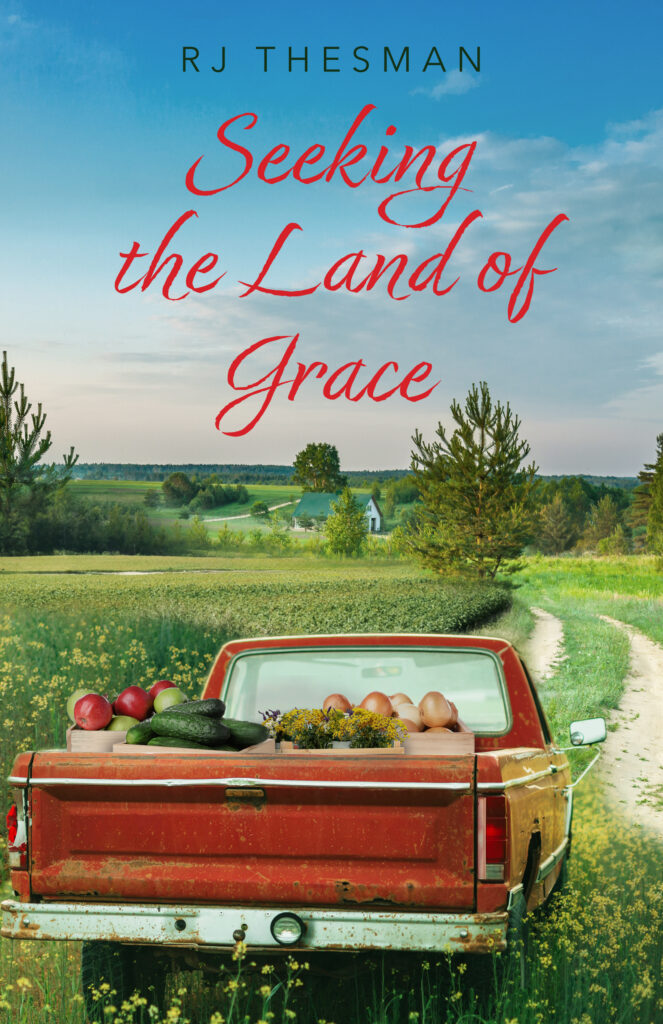
In my newest book, Seeking the Land of Grace, Ruthie’s breakthrough happened in a cemetery — an unlikely place to find life. But as she read the gravestones of friends and family members, she began to realize the truth about God’s grace. She ‘saw’ the truth in those engravings but felt it in her soul.
So the Middle Step of finding a story is actually the first germ of an idea that sprouts in your writer’s brain. You develop that breakthrough with all the finely-tuned details of fiction writing: the senses of the main character, the setting, time of day, weather, light, colors, animals, sounds, memories, etc. Milk it for everything you can.
As you develop the rest of your story, you may return to this breakthrough moment and flesh it out even more. What the character is wearing which often reveals personality. Whether the main character needs to be alone, as in Ruthie’s cemetery moment, or bouncing off other characters in a crowd. How faith or lack of faith enters into the crisis of the moment. Fleshing out this middle step creates a strong bond between Step One and Step Three.
Step One becomes a sort of back story to the breakthrough moment. What was it about the character’s life that led to this moment? In Ruthie’s story, the back story was her life as a pastor’s daughter and the legalism that strangled her soul. She yearned for a different way to live, so as the author — it was my job to figure out how she would get there.
Step One involves developing all the characters, placing them within the right setting, and managing all the plotlines so that the story makes sense. It’s a fun place to mess around with all sorts of creative ideas as you place your main character in some disastrous scenes.
Step Three follows the vital breakthrough moment to bring the main character into her afterlife. How did her/his breakthrough change her/him? What does life look like now? A happy ending or more of a bittersweet resolution? Realism versus fantasy? Most readers like to discover a happy ending, but the writer’s job is to make sure Step Three makes some kind of sense. Yet reality offers a few bumps along the way.
To make sure your story is fitting together into these three pieces, a critique group is a must. Other eyes on your precious manuscript. Other brains working alongside yours to bring your main character through her breakthrough and into a glorious resolution.
So if you’re working on a story idea, start with the Middle Step. Then jot down a bit about the back story for Step One. Then how you envision the story ending for Step Three.
But don’t be surprised if your main character changes things. And that is the fun of writing fiction. The final surprise.
©2026 RJ Thesman – All Rights Reserved
So … have you read Ruthie’s story yet? It’s on Amazon, just waiting for you. Seeking the Land of Grace. In print and Kindle versions.